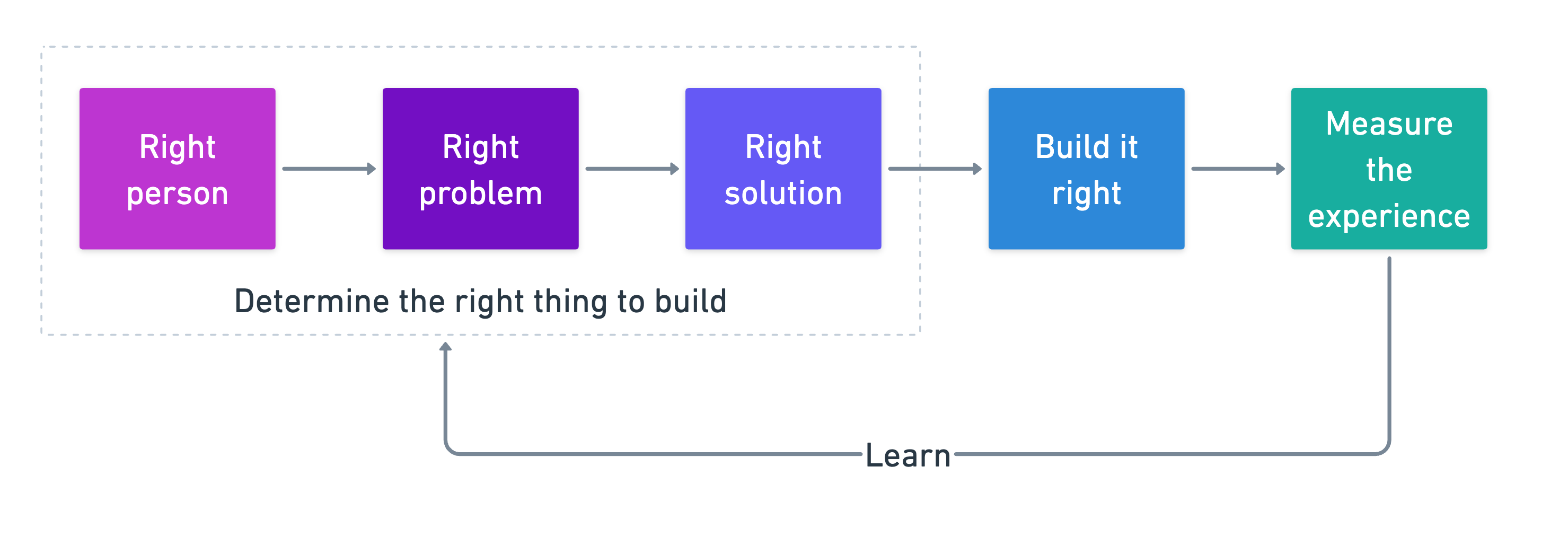
Philosophy
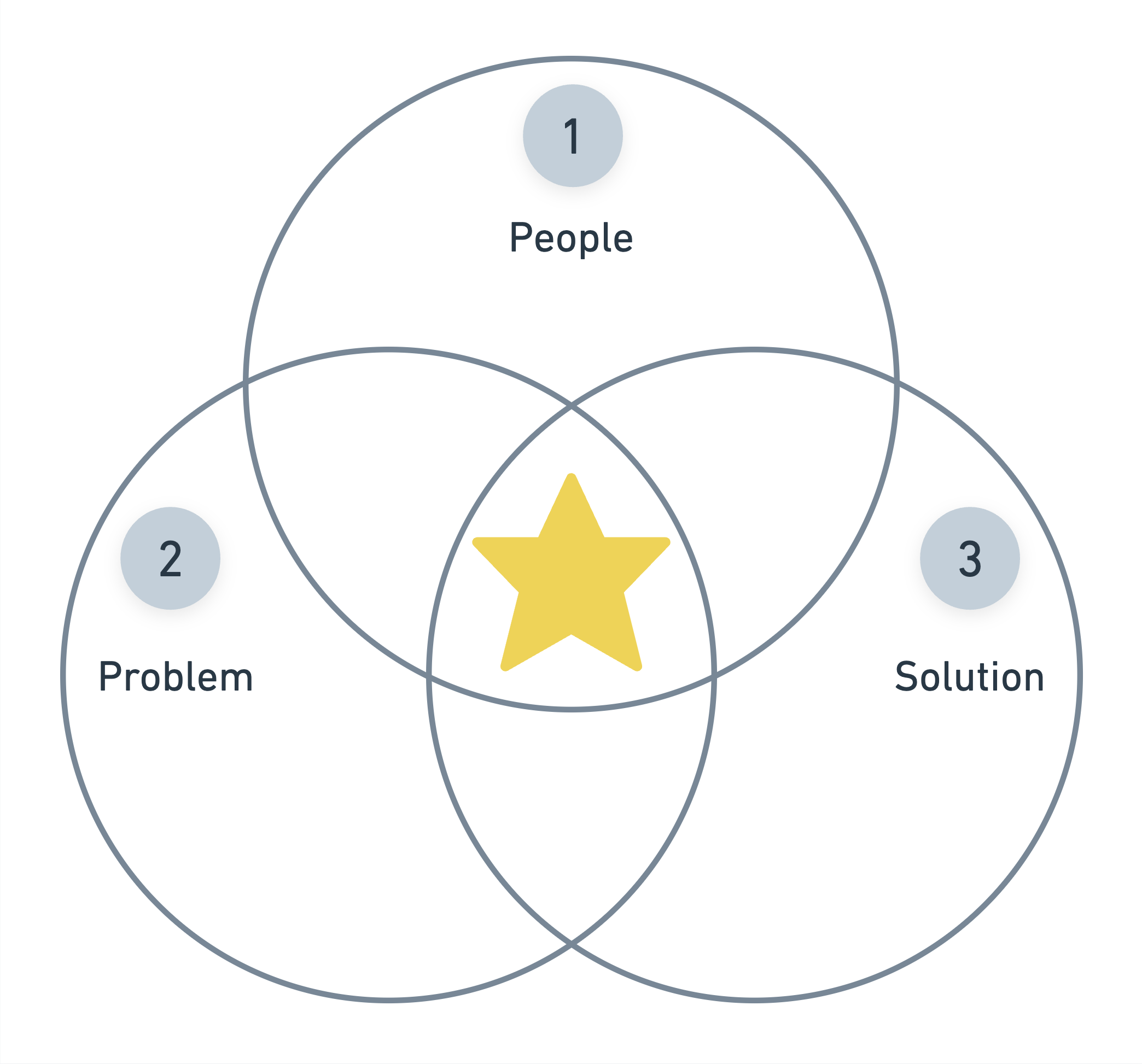
Deliberate Choices
The right solution3 to the right problem2 for the right people1.
Software is a means to an end. It ought to be designed that way, beginning with the people we're designing for, and focusing on helping them solve the problems that matter most to them.
"Success", then, is multifaceted. It is ultimately measured in terms of how much we improve the lives of the people who use the system we've built.
Everything else is a means to that end.
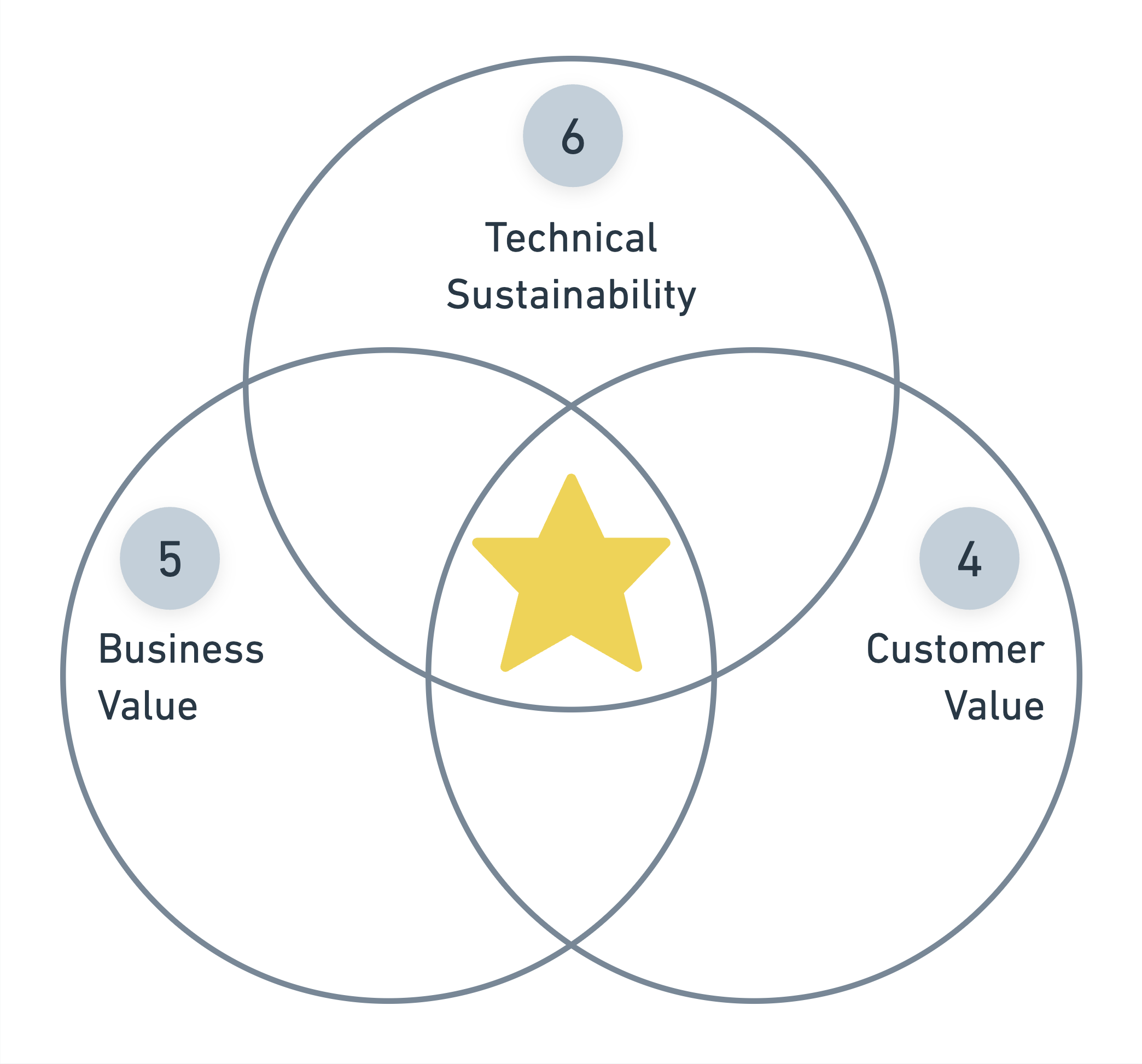
Mutual Benefit
Built to deliver customer value4 that drives business value5 in a way that's technically sustainable6.
Business success depends largely on customer success. When we find the synergy between the two, we create a virtuous cycle of mutual benefit: customer value → business value.
Engineering is involved early and often, to ensure that this value can be delivered powerfully and sustainably over time.
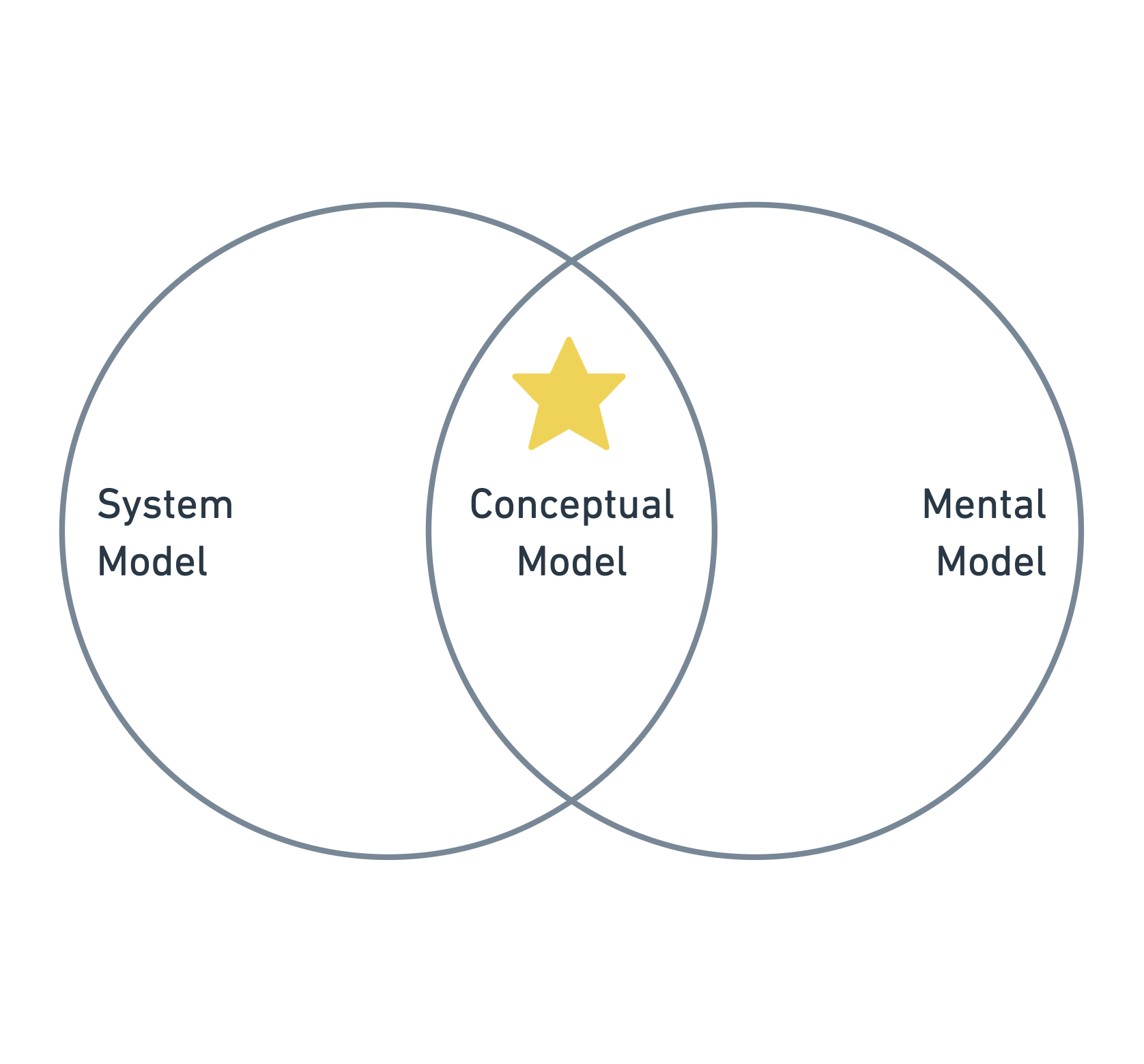
Systemic Fit
Bridging the gap between the way the system actually works and the way people expect it to work.
Mental models are the unstated expectations, needs, and desires people bring into their experience.
The system model is the way the system actually works, the composite of all the decisions we've made in building it.
Most of my work is in the space between — the conceptual model "bridge" — helping us create and strengthen systemic fit between the two.
In Practice
While principles are crucial, they are only as good as the practice that brings them to life.
This is how I apply the principles described above in my design practice. It's a general sequence of steps, not a strict linear process.